Why Do You Only Keep 70–80% of a Free Bet’s Value?
You'll usually keep about 70–80% of a free bet's value, because a winning free bet doesn't return its stake. Here's why, and how to keep more.

By RyanChecked 10 min readBasics
If you're new to matched betting, one of the first things you’ll notice is that a £10 free bet never gives you £10 profit. In fact, when done correctly, most matched bettors only make around £7 to £8 profit from a £10 free bet.
Three things take the rest: the free bet's stake isn't returned, the lay odds are usually a little higher than the back odds, and the exchange takes commission.
In this guide, we’ll explain why free bets are worth less than face value, how it fits into your matched betting strategy, and how to maximise your profit from every free bet you get.
What Is a Free Bet Offer?
A free bet is a common bookmaker promotion. You might get one for signing up to a new bookie or as a reward for placing a qualifying bet.
The key thing to remember is this: unlike a normal bet, if your free bet wins, you only get the winnings — not the stake. The stake belongs to the bookie and isn’t returned.
For example, a £10 free bet at odds of 3.0 returns £20 profit. A normal £10 bet would return £30 (£20 profit + £10 stake).
Matched bettors use free bets to lock in profit by laying the same outcome on a betting exchange. Our free bets guide walks through the whole process.
Why the Stake Matters
Let’s look at a quick example.
Normal Bet (with your own money)
- Stake: £10
- Odds: 5.0
- Returns: £10 (stake) + £40 (profit) = £50 total return
Free Bet
- Stake: £10 (bookie’s money)
- Odds: 5.0
- Returns: £0 (stake not returned) + £40 (profit) = £40 total return
So even if both bets win, the free bet returns £10 less — because the stake isn’t included.
That means right from the start, your free bet isn’t worth £10. It’s worth £10 minus the missing stake — which is why it can never return the full amount as profit.
This is Why We Use Free Bets on Higher Odds
When using a free bet, you don’t get the stake back — only the winnings. So the higher the odds, the bigger the winnings — and the more actual cash you can turn into profit when matched betting.
For example, placing a £10 free bet at odds of 1.2 would only return £2 profit. But the same £10 free bet at odds of 5.0 gives you £40 profit before laying.
Free bets should always be used at odds over 5.0, where possible.
Odds of 5.0 or over give you a solid return (£40 profit from a £10 free bet), without making your lay liability too high. A high lay liability ties up your bankroll when the exchange freezes enough to cover potential losses, and makes it harder to manage multiple bets at once.
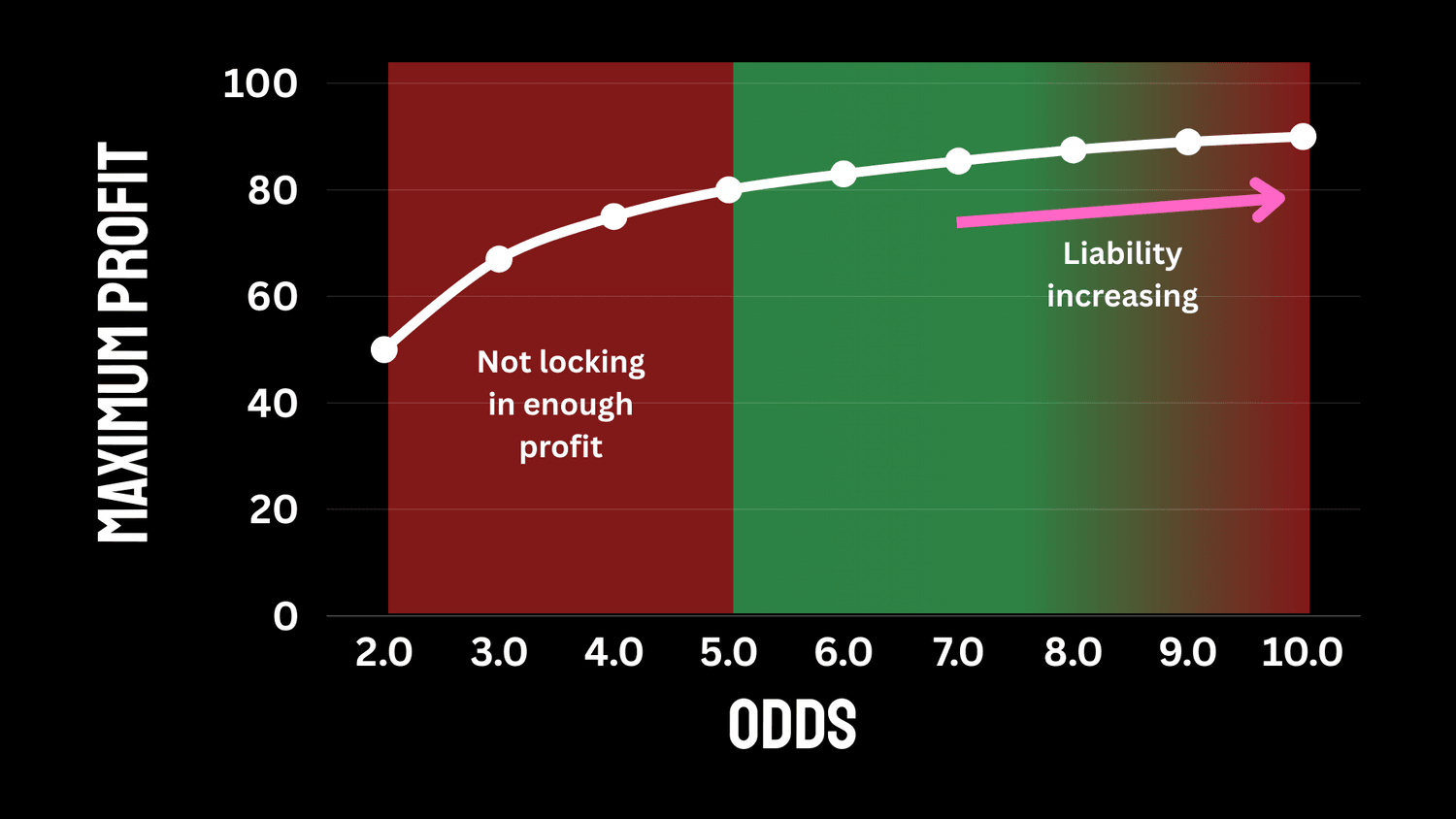
Around odds of 5.0-7.0, you get the best of both: a strong return and a manageable lay liability. That’s why matched bettors often stick to odds between 5.0 and 7.0 when using free bets, particularly when starting out. There's more on this in why we use free bets at higher odds.
Use OddsMonkey Ad to find close matches for your free bet, keep track of bets and profits, and find free bet offers. Closer matches mean you keep more of each free bet.
Locking in Profit With Matched Betting
As matched bettors, we use betting exchanges like Smarkets or Betfair to lay the same outcome we back with our free bet. Done correctly, this locks in a profit whatever happens.
But laying the free bet isn’t perfect. Here’s why:
- Lay odds are usually slightly higher than the back odds.
- The exchange might charge a commission on your winnings.
Example: £10 Free Bet at Odds of 7.0
Step 1: Place Free Bet
You back a team at odds of 7.0 using your £10 free bet.
If the team wins, you get £60 profit (stake not returned).
Step 2: Place Lay Bet
You lay the same team on the exchange at odds of 7.5. The commission is 2%.
After running the numbers through a matched betting calculator, you see you'll lock in a minimum profit of £7.86 — no matter the result.
You'll get to keep 78.6% of the free bet's face value.
So Why Do You Only Keep 70–80%?
Let’s break it down. For a free bet where the stake isn't returned, the profit you can lock in is:
Profit = Free bet × (Back odds − 1) × (1 − Commission) ÷ (Lay odds − Commission)Using the example above: £10 × 6 × 0.98 ÷ 7.48 = £7.86.
- The stake isn't returned. That's why the formula uses back odds − 1. It's not a separate cut: it's the reason you're always below 100%, and why low odds are so bad (at 1.2 you'd keep under £2 of a £10 free bet).
- Lay odds are higher than back odds. The bigger the gap, the less you keep.
- Exchange commission (usually 2%) takes a little more off.
Put together, with high odds and a close match, you'll usually keep around 70–80% of the face value (a bit more at 0% commission).
Easier to see than to read about. Each slider below changes one of those three things, and the bar shows where your free bet goes. Notice how the missing stake shrinks as the odds go up: that's the whole reason we use free bets at higher odds.
Try it: where does your free bet go?
Move the sliders and the figures change as you go. It starts on the example above.
How much higher the lay odds are than the back odds.
£7.86kept from your £10 free bet: 78.6%
- You keep: 78.6%
- Missing stake: 14.3%
- Gap to the lay odds: 5.7%
- Commission: 1.4%
Lay £8.02 at 7.50. You need £52.13 in your exchange account to cover the liability.
Missing stake (14.3%). At 7.0, a winning £10 free bet pays £60.00 in winnings, but not the £10 stake. With your own money it would return £70.00, so the free bet starts £10 short. The higher the odds, the smaller that slice: it's 50% at 2.0 but only 10% at 10.0. That's why higher odds keep more.
Gap to the lay odds (5.7%). Laying at 7.50 instead of 7.0 costs a little more. The closer the match, the less you lose.
Commission (1.4%). The exchange takes 2% of what your lay wins. The lay stake is set so both outcomes match, so that cost comes off either way.
The catch. Higher odds need a bigger liability: £52.13 here. Odds of 5.0 to 7.0 keep most of the value without tying up too much money.
You keep £7.86, 78.6% of the £10 free bet. Liability £52.13.
| Back odds | Lay odds | You keep | Liability |
|---|---|---|---|
| 2.0 | 2.04 | £4.85 (48.5%) | £5.15 |
| 3.0 | 3.10 | £6.36 (63.6%) | £13.63 |
| 4.0 | 4.20 | £7.02 (70.3%) | £22.98 |
| 5.0 | 5.20 | £7.57 (75.7%) | £32.42 |
| 6.0 | 6.20 | £7.93 (79.3%) | £42.07 |
| 8.0 | 8.40 | £8.18 (81.9%) | £61.79 |
| 10.0 | 10.50 | £8.39 (84.2%) | £81.61 |
What About Stake Returned Free Bets and Free Bet Tokens?
Not every free bet works the same way:
- Stake returned (SR): rarer, but you get the free bet amount back with the winnings, so you lay it like a normal bet and keep far more. A £10 SR free bet backed at 5.0 and laid at 5.2 with 2% commission locks in about £9.46, around 95%.
- Restricted tokens: many sign-up offers now pay free bets that only work on bet builders or accas, often with minimum odds and expiry dates as short as 7 days. You can still lock them in, but close matches are harder to find, so you may keep less. See our bet builder and acca guides.
Our guide to free bet types compares SNR and SR side by side, and covers restricted tokens, expiry and when to underlay or overlay.
Tips to Maximise Free Bet Value
- Use high odds (ideally 5.0–7.0) to increase the value of your back bet.
- Look for close matches between back and lay odds.
- Check the terms: minimum odds, expiry, whether it's stake returned or not, and any market restrictions.
- Use OddsMonkey to find the best matches available to maximise profit from your free bet, keep track of bets and profits, and find free bet offers.

Ad We earn a commission if you join OddsMonkey through our links, at no extra cost to you. We could partner with plenty of matched betting tools. We recommend OddsMonkey because it's the one Ryan uses, and loves, for his own matched betting. That commission keeps Matched Edge free.
FAQs
How much is a £10 free bet worth?
Usually about £7 to £8 once it's matched, for a stake not returned free bet at odds of 5.0 or more with a close lay. A stake returned free bet is worth more, often around £9.50.
What odds should I use a free bet at?
Around 5.0 to 7.0 is a good place to start: high enough to keep most of the value, without a huge liability. Higher odds can keep a little more, but they need more money at the exchange.
Why is a stake returned free bet worth more?
Because you get the stake back as well as the winnings, you lay it like a normal bet. A £10 stake returned free bet at 5.0, laid at 5.2 with 2% commission, locks in about £9.46.
Final Thoughts
Free bets are one of the biggest ways to make money from matched betting. But they’re not “free money” in the way most people think. Because the stake isn’t returned, and due to small lay losses and commission, you’ll usually end up with 70–80% of the free bet value.
That’s perfectly normal. A £10 free bet giving you around £7.50, as long as both bets are placed correctly, is still a good result.
New to this? Our free crash course covers the basics, and our free calculators do the sums for every offer type.